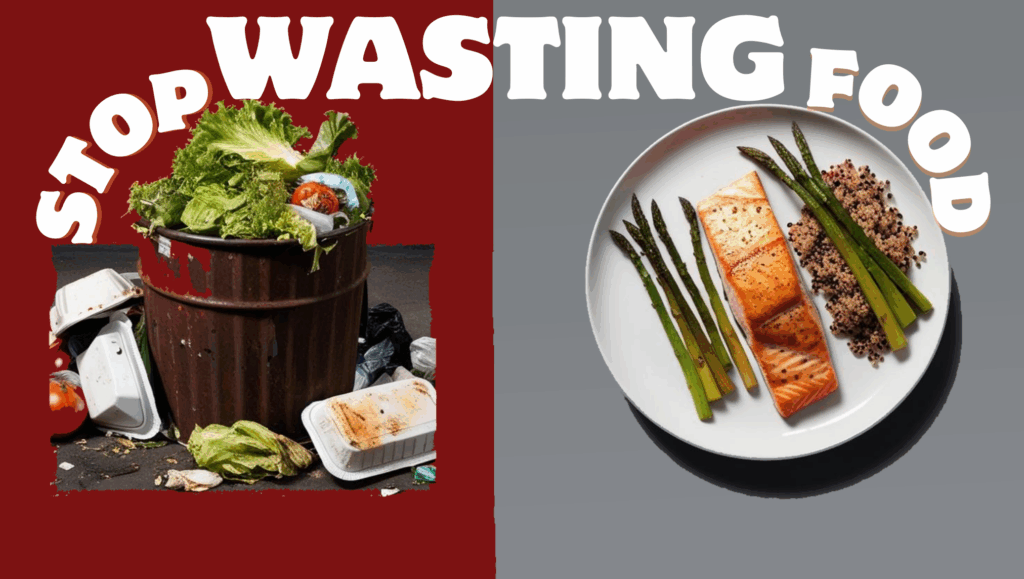
So apparently, I’m single-handedly responsible for all food waste on Earth—at least that’s what my garbage can would have you believe. Raise your hand if you’ve ever bought a bag of spinach, opened it once, and then five days later sent it directly to the trash. Yep, me too.
What Is Food Waste?
Food waste is perfectly good, safe-to-eat food that gets thrown away instead of eaten. This happens everywhere: at home, in restaurants, stores, and farms. But here’s the thing—none of us waste food because we want to. We waste it because we don’t know how to avoid it.
Why Does Food Get Wasted?
There are several common reasons why good food ends up in the trash:
Appearance Standards: Ugly or oddly shaped produce gets tossed because apparently carrots need to be supermodels now. Go to the end of this article to learn how you can save ugly food
Expiration Date Confusion: Most foods are fine past their sell-by date, but people panic and throw them out anyway.
Overproduction: Farms produce more than they can sell, and unsold food gets trashed.
Transportation and Storage Issues: Food gets damaged in transport or stores toss it for minor imperfections.
The Single Person’s Dilemma
Here’s a reality check: cooking for one is a food waste nightmare. The average single-person household wastes 60% more food than a family. We’re the ones getting blamed for all the food waste, but there’s no one telling us how to stop doing it.
Remember home economics class? It’s not even offered anymore. And even if you took it, it was all about feeding a family, not learning how to cook just for yourself. Then in our later years, after feeding a family for 18+ years, you suddenly have to relearn how to cook all over again as empty nesters.
Common Food Waste Struggles
Let’s be honest about the challenges we face:
- Family-sized everything: Grocery stores sell family-sized packages. I don’t need 12 tortillas for one burrito, thanks.
- Recipe portions: Online recipes always make food for four to six people.
- Bulk buying pressure: You feel pressured to buy in bulk, but then half of it goes bad.
- Leftover syndrome: Those leftovers you swear you’ll eat later? Yeah… no.
The Real Cost of Food Waste
The financial impact is staggering. If you throw away just $10 of food a week, that’s over $500 a year literally thrown in the trash. That’s not even counting the wasted water, energy, and packaging.
Think about the time cost too—the time you spend prepping, shopping, and cooking, all for food you’re never going to eat.
And while we love blaming corporations for environmental problems, households actually waste more food than restaurants, farms, and grocery stores combined. Food waste is a huge contributor to climate change, and multiplied by millions of people, those “few leftovers” add up fast.
The Solution: Stop Cooking Like You Have a Family When You Don’t
The biggest secret to reducing food waste is simple: stop cooking like you have a family when you don’t. Here’s how to make that shift:
Smart Shopping Strategies
- Buy loose produce instead of pre-packaged bags
- Shop bulk bins for exact amounts you need
- Plan tiny portions from the start
- Skip the family-size trap—you don’t need a Costco membership for one person
Recipe and Meal Planning
- Find single-serve recipes instead of trying to halve family recipes
- Plan cross-utilization: If you buy a veggie, make sure it works for three or more dishes
- Pre-plan your week to avoid impulse purchases
Portion Control and Storage
- Know your portion sizes: If you can’t eat one of those big chicken breasts, butterfly it in half and make two meals
- Divide and conquer: Is that steak too big? Cut it in half and freeze the rest for later
- Store food better: A little planning goes a super long way
For example, if that potato is way too large, cut it in half, soak the other half in water, and pop it in the fridge for 48 hours.
Why This Matters So Much
Somewhere along the way, parents stopped teaching their kids how to cook. Now instead of learning, they’re eating out, wasting money, and creating even more food waste with huge restaurant portions and leftovers they’ll never eat. They’re eating boxed meals full of salt that are bad for them, or wasting money on overpriced convenience foods.
Even as someone who’s been a personal chef, cooking for others, batch prepping meals, and making fancy dinners for guests, I fell into this trap. At 48, when I became an empty nester, I had no clue how to cook for one. Breakfast was yogurt and granola, lunch was a sandwich (if my bread hadn’t molded), and supper was another sandwich, skipping the meal entirely, or wasting money going out.
When I talked to my kids and other young adults, they were having the same problem. That’s when I realized: if we’re all struggling, how many more people are out there having the exact same problem?
The Benefits of Cooking for One
Cooking for one isn’t just a necessity—it’s actually enjoyable when you do it right:
- You know exactly what’s in your food (no funky chemicals you can’t pronounce)
- You get exactly what you want and how you want it
- You waste less because you learn to use everything you buy
- You save money—no more wasting $500+ a year right into the trash can
Practical Hacks for Success
Here are some game-changing strategies:
- Make two or three portions instead of ten
- Freeze things in single-serve sizes so you can grab them later
- Master the art of ingredient versatility—one vegetable, multiple meals
- Invest in proper storage containers to keep food fresh longer
The Bottom Line
Cooking for one doesn’t have to be boring, overwhelming, or wasteful. With the right strategies, you can eliminate food waste, save money, and actually enjoy the process of cooking for yourself. It’s about changing your mindset from family-style cooking to intentional, single-serving meal preparation.
Stop throwing away your hard-earned money and start cooking with purpose. Your wallet, your health, and the environment will thank you for it.
Resources
Where To Buy Ugly Food ~ search ugly food near me, ugly food sellers, farmer’s markets and don’t be afraid to ask if they have and are hiding the ugly stuff, ask your market what they do with rejected produce and are they willing to sell it
If you’ve ever bought The Ugly Co. in store, then you’ve already rescued some ugly fruit
Nationwide ~ Imperfect Foods & Misfits Market
DFW Waco Austin Farmbox Delivery
Charleston, SC ~ Community Supported Grocery (in cahoots w/ Lowcountry Street Grocery) 1108 Wappoo Road hello@lowcountrystreetgrocery.com
Maryland, Washington, DC, Virginia, Greater Philadelphia, Southern New Jersey, Northern Delaware, and Raleigh, North Carolina Hungry Harvest
Cambridge, Dorchester, Roxbury & Salem MA Daily Table
Colorado Salvage Grocery Store
Fort Lupton Robb Inc., 511 McKinney Ave., 8:30-5 Monday through Saturday
Arvada The Friday Store, 5636 Newland Way, 303-422-8562 9-5 Friday and Saturday
Dacono Discount Grocery, 913 Carbondale Drive, 303-833-5005 9-6 p.m. M-W, F; 9-4 Saturday
Greeley 12th Street Pantry, 716 12th St., 970-356-7747 9-6 -Monday through Friday; 9-5- Saturday
Loveland Esh Discount Grocery, 4221 W. Eisenhower Blvd. 970-663-1883
Queenstown – Singapore UglyFood Co